
As the days grow longer and spring whispers in the air, there’s an undeniable anticipation that fills the kitchen—a time-honored tradition takes shape in the form of Italian Easter Bread. The vivid colors of dyed eggs, nestled within a golden braid of sweet, pillowy dough, create a visual feast that sparks joy and celebration. I stumbled upon this cherished family recipe one Easter, and it quickly became a highlight in our gatherings, featuring an intoxicating mix of rich flavors like buttery sweetness and a hint of almond.
What truly sets this bread apart is not only its beautiful presentation but also the way it brings people together. With minimal fuss involved, you’ll find that baking this Italian Easter Bread can easily transform a simple weekend afternoon into a special occasion, invoking warmth and laughter around the table. Whether you’re new to bread-making or a seasoned pro, this delightful creation will impress everyone, and trust me—once you’ve shared a slice, fast food will be a distant memory. Let’s dive into the recipe that will make your spring celebrations unforgettable!

Why love Italian Easter Bread?
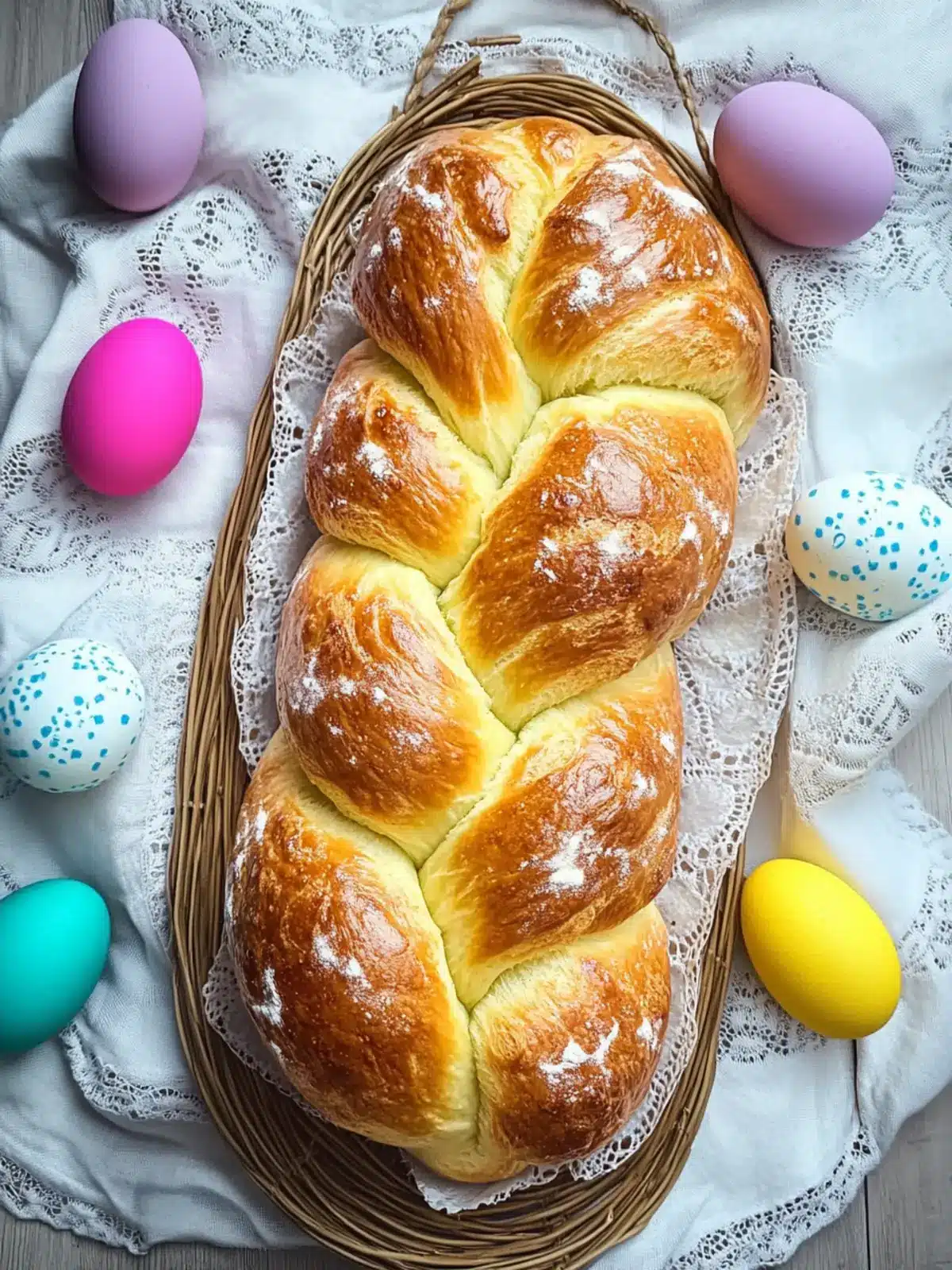
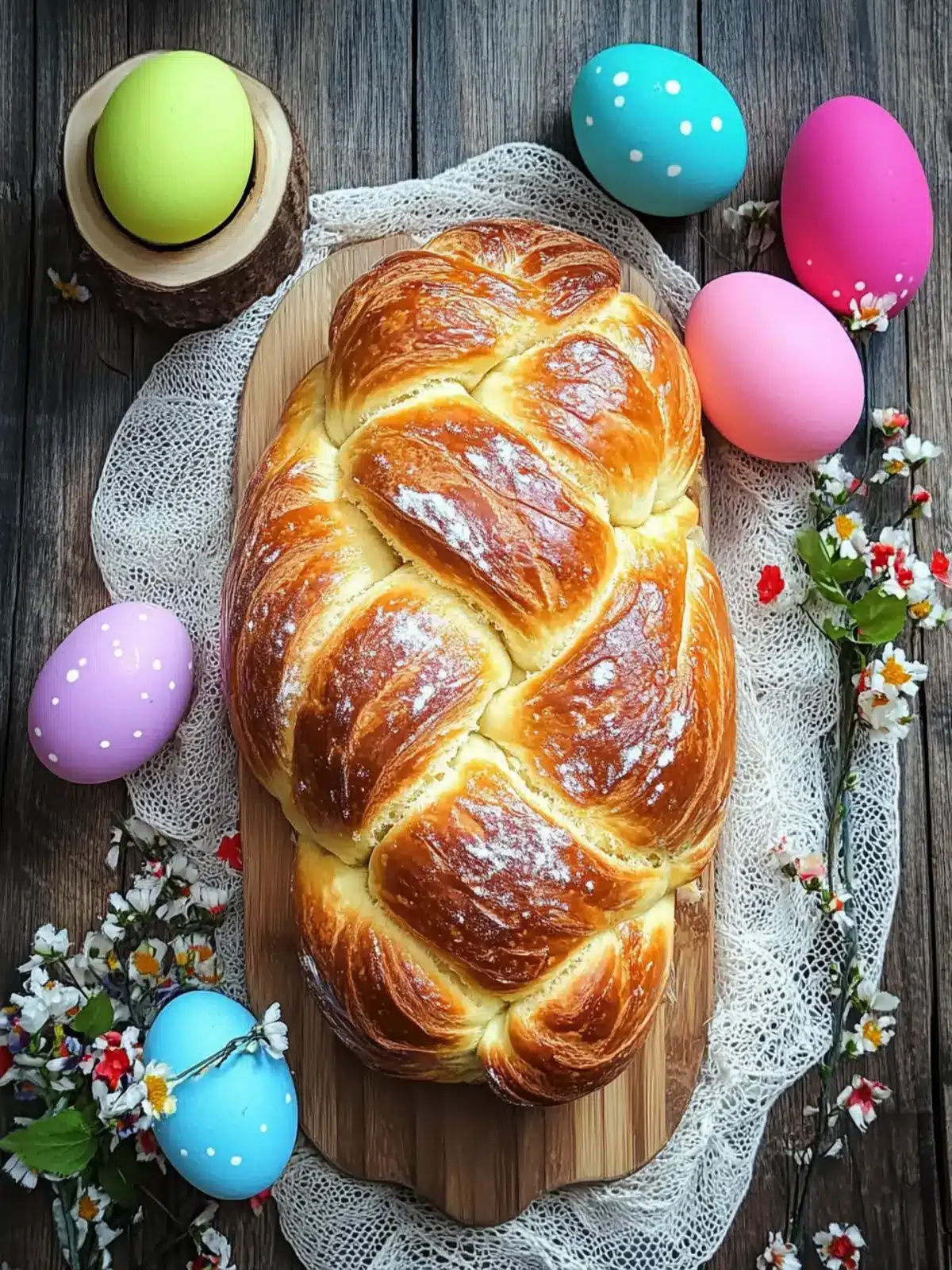
Visual Appeal: This gorgeous bread, adorned with vibrant dyed eggs, serves as a stunning centerpiece for any spring table.
Rich Taste: Its buttery sweetness combined with a hint of almond creates a captivating flavor profile that will leave everyone wanting more.
Simple Method: With straightforward steps, even beginner bakers can master this festive treat, making it accessible for all skill levels.
Family Tradition: Perfect for gathering with loved ones, this bread fosters connection and joy during holiday celebrations.
Versatile Delight: Enjoy it fresh out of the oven or toasted for breakfast—it’s perfect for any occasion!
If you’re interested in honing your baking skills, check out our post on easy homemade breads to explore more delightful recipes!
Italian Easter Bread Ingredients
• Prepare to create a delightful centerpiece for your spring table with these essential components!
For the Dough
- 1 cup warm milk (105 – 115°F) – This helps activate the yeast for a fluffy texture.
- 1 package active dry yeast – The magic ingredient that helps the dough rise beautifully.
- 2 tablespoons sugar – A hint of sweetness that nourishes the yeast for a perfect rise.
- 5 cups flour; more if needed – All-purpose flour works best for that pillowy bread consistency.
- 1 cup butter (melted, cooled) – Adds richness and depth to the flavor of your Italian Easter Bread.
- 4 eggs – Provides structure and moisture, ensuring a soft crumb.
- ½ cup sugar – Enhances the sweetness of the bread for a lovely contrast with the savory eggs.
- 2 teaspoons grated lemon zest – This brings a fresh brightness that elevates the flavor.
- 1 teaspoon salt – Balances the sweetness and enhances all the flavors.
- ½ teaspoon almond extract – A subtle nutty flavor that makes this bread unforgettable.
For Decorating
- 3-4 raw eggs (for dyeing) – These colorful eggs will create a beautiful and festive presentation in the loaf.
- 1 egg yolk (for egg wash) – Gives the bread a lovely golden shine when baked.
- 1 tablespoon of water (for egg wash) – Blends with the yolk for a perfect brushing consistency.
Embrace the joy of sharing homemade food, and let your loved ones indulge in this Italian Easter Bread that will surely have them coming back for seconds!
How to Make Italian Easter Bread
-
Combine ingredients: In a small bowl, mix the warm milk with the active dry yeast and 2 tablespoons of sugar. Set this aside for about 5-10 minutes until it becomes foamy—this means the yeast is active!
-
Mix the dough: In a mixing bowl with a dough hook, add 4 cups of flour along with the melted butter, 4 eggs, ½ cup sugar, lemon zest, salt, and almond extract. Mix until everything is well-combined.
-
Add the yeast mixture: Once the yeast mixture is foamy, pour it into the bowl with the other ingredients. Stir everything together until you have a cohesive dough.
-
Adjust consistency: If the dough feels too sticky, sprinkle in more flour gradually until it’s manageable. It should be soft but not overly wet.
-
Knead the dough: Let your mixer knead the dough for about 8 minutes until it pulls away from the sides of the bowl. This gives your bread a lovely texture!
-
Hand-knead: Transfer the dough to a floured surface and knead it by hand for a few minutes. You want that smooth finish!
-
Let it rise: Place the dough in an oiled bowl, cover it with plastic wrap or a kitchen towel, and let it rise in a warm spot until it doubles in size, about 1-1.5 hours.
-
Dye the eggs: While the dough rises, it’s the perfect time to dye your 3 raw eggs in bright colors for decorating later on.
-
Prep for braiding: After the dough has risen, punch it down gently and transfer it to a floured surface.
-
Shape the dough: Divide the dough into two equal balls and roll each into long ropes. This is when the magic of braiding begins!
-
Braid and decorate: Braid the two ropes into a beautiful loaf and place it on a parchment-lined baking tray. Insert the dyed eggs into the braided sections for a festive touch.
-
Final rise: Cover the loaf with plastic wrap again and let it double in size for about 30 minutes.
-
Prepare the egg wash: Combine the egg yolk with 1 tablespoon of water and brush it over the top of the loaf for that golden finish.
-
Bake: Preheat your oven to 350°F and bake the bread for about 20 minutes or until it’s beautifully golden brown.
-
Cool and enjoy: Once baked, let it cool for a few minutes before slicing. The delightful aroma is irresistible!
Optional: Serve warm with butter for an extra special treat.
Exact quantities are listed in the recipe card below.
Expert Tips for Italian Easter Bread
Temperature Matters: Keep your milk within the 105-115°F range; if it’s too hot, it can kill the yeast, and if too cold, it won’t activate properly.
Check Your Yeast: Always ensure your yeast is fresh. If it doesn’t froth in the warm milk after 10 minutes, it’s best to start over with new yeast.
Flour Gradually: Add flour incrementally if the dough is sticky; this prevents your bread from becoming dense. A correct balance is essential for the light texture of Italian Easter Bread.
Handle with Care: Avoid over-kneading, as it can lead to a tough loaf. Knead just until smooth and elastic.
Cool Before Slicing: Let your bread cool for at least 10 minutes after baking. Cutting too soon can cause it to become gummy.
Don’t Rush the Rise: Allow the dough to fully double in size during the first rise; this is critical for achieving that fluffy goodness we love in Italian Easter Bread.
What to Serve with Italian Easter Bread?
Imagine the vibrant colors of springtime gracing your dining table as you complement this traditional bread with delightful pairings.
- Fresh Fruit Salad: A medley of seasonal fruits adds brightness and balances the sweet richness of the bread.
- Creamy Ricotta Cheese: Spread some velvety ricotta on a slice for a luscious experience that enhances the bread’s flavors.
- Honey Drizzle: A touch of golden honey accentuates the buttery notes, creating a beautiful harmony of sweetness.
- Savory Cheese Platter: Pair with aged cheeses for a delightful contrast; the saltiness perfectly offsets the bread’s sweetness.
- Buttery Garlic Spinach: This side dish adds a savory element, offering a nutritious counterpoint to the rich, sweet bread.
An enticing beverage to accompany the meal can elevate the entire experience.
- Chilled Lemonade: A refreshing glass cuts through the richness with its zesty brightness.
- Espresso or Coffee: A warm cup of espresso complements the sweet flavors, making for a comforting end to your meal.
- Vanilla Ice Cream: Serve a slice of bread warm with a scoop of creamy vanilla ice cream for an indulgent touch.
These pairings will not only enhance your dining experience but also make your Easter celebrations feel extra special!
Make Ahead Options
These Italian Easter Bread delights are perfect for meal prep enthusiasts! You can prepare the dough up to 24 hours in advance; simply make it up to the first rise, then cover it tightly with plastic wrap and refrigerate. When you’re ready to bake, take it out and let it come to room temperature for about 30 minutes before proceeding with the second rise and braiding. You can also dye the eggs a day ahead, keeping them in a cool, dry place until you need to insert them into the loaf. This way, you’ll enjoy freshly baked bread with just a bit of planning, ensuring the quality remains just as delicious and tender!
Italian Easter Bread Variations
Feel free to explore these delightful twists to customize your Italian Easter Bread and make it truly your own!
-
Dairy-Free: Substitute almond or coconut milk for regular milk and use dairy-free butter for a delicious alternative.
-
Fruit-Infused: Add 1 cup of dried fruit, such as raisins or candied citrus peel, to the dough for a burst of flavor and texture.
-
Nuts Galore: Mix in 1/2 cup of slivered almonds or chopped walnuts for an added crunch that complements the soft bread beautifully.
-
Herbal Hint: Stir in 1 teaspoon of finely chopped fresh rosemary or thyme for an aromatic twist that’s both unique and delightful.
-
Chocolate Lovers: Incorporate 1/2 cup of chocolate chips into the dough for a heavenly sweetness that children and adults will adore.
-
Spicy Kick: Add a pinch of cinnamon or nutmeg to the flour for a warm, spicy undertone that dances on your taste buds.
-
Gluten-Free: Use a 1:1 gluten-free flour blend to cater to your dietary needs while still enjoying every delectable bite.
-
Eggless Option: Replace eggs with 1/4 cup of applesauce or a flaxseed meal mix (1 tablespoon flaxseed meal + 2.5 tablespoons water) for a vegan-friendly twist.
Each variation opens new doors of flavor and texture, ensuring that your Italian Easter Bread remains a cherished favorite in your home. Happy baking!
How to Store and Freeze Italian Easter Bread
Room Temperature: Store the Italian Easter Bread in an airtight container or wrapped in plastic wrap at room temperature for up to 3 days to maintain its freshness.
Fridge: If you prefer to keep it longer, place it in the fridge for up to a week, but note the bread may dry out. Wrap it tightly in plastic to help retain moisture.
Freezer: For extended storage, freeze the bread for up to 3 months. Slice it first, wrap each slice in plastic wrap, and then place in a freezer bag for easy thawing.
Reheating: To reheat, simply thaw a slice at room temperature, then warm it in the toaster or oven until it’s soft and fragrant—just like freshly baked!
Italian Easter Bread Recipe FAQs
What type of milk should I use for this recipe?
Absolutely! You should use warm milk within the 105-115°F range. This temperature is crucial, as it activates the yeast without killing it. Make sure to measure carefully for the best results.
How long can I store Italian Easter Bread?
You can store your Italian Easter Bread at room temperature in an airtight container for up to 3 days. If you want to extend its freshness, wrapping it tightly in plastic and placing it in the fridge can keep it for up to 1 week, although it may dry out slightly.
Can I freeze Italian Easter Bread?
Definitely! For long-term storage, slice the bread and wrap each slice individually in plastic wrap. Place the slices in a freezer bag, and you can keep them for up to 3 months. When you’re ready to enjoy, thaw at room temperature and warm it in a toaster or oven.
What if my dough is too sticky?
No worries! If your dough is feeling too sticky, simply add more flour gradually—about 1 tablespoon at a time—until it’s manageable. Aim for a soft, elastic texture that pulls away from the bowl but isn’t overly wet.
Can I use different types of eggs for decorating?
Yes! You can use white or brown eggs for dyeing, but if you’re concerned about food safety, consider using cooked, dyed eggs instead. Just make sure any eggs used for decorating are thoroughly cleaned before applying to your bread.
Is this recipe suitable for people with nut allergies?
Very! The almond extract can be substituted with an equal amount of vanilla extract, allowing you to avoid nuts entirely while still retaining a delightful flavor in your Italian Easter Bread. Always double-check labels for other ingredients like butter and check for allergens.

Italian Easter Bread That Will Wow Your Family This Spring
Ingredients
Equipment
Method
- In a small bowl, mix the warm milk with the active dry yeast and 2 tablespoons of sugar. Set aside for 5-10 minutes until foamy.
- In a mixing bowl with a dough hook, combine 4 cups of flour, melted butter, 4 eggs, ½ cup sugar, lemon zest, salt, and almond extract. Mix until well combined.
- Add the yeast mixture to the dough mixture and stir until cohesive.
- If the dough is too sticky, gradually add more flour until manageable.
- Knead the dough in a mixer for about 8 minutes.
- Transfer to a floured surface and knead by hand for a few minutes.
- Place the dough in an oiled bowl and let it rise until doubled, about 1-1.5 hours.
- Dye the 3 raw eggs in bright colors while the dough rises.
- After the rise, punch down the dough and transfer to a floured surface.
- Divide the dough into two balls and roll each into long ropes.
- Braid the ropes into a loaf and insert the dyed eggs into the braided sections.
- Cover and let the loaf rise for 30 minutes.
- Combine the egg yolk with water and brush over the loaf.
- Preheat the oven to 350°F and bake for about 20 minutes.
- Let it cool before slicing.