
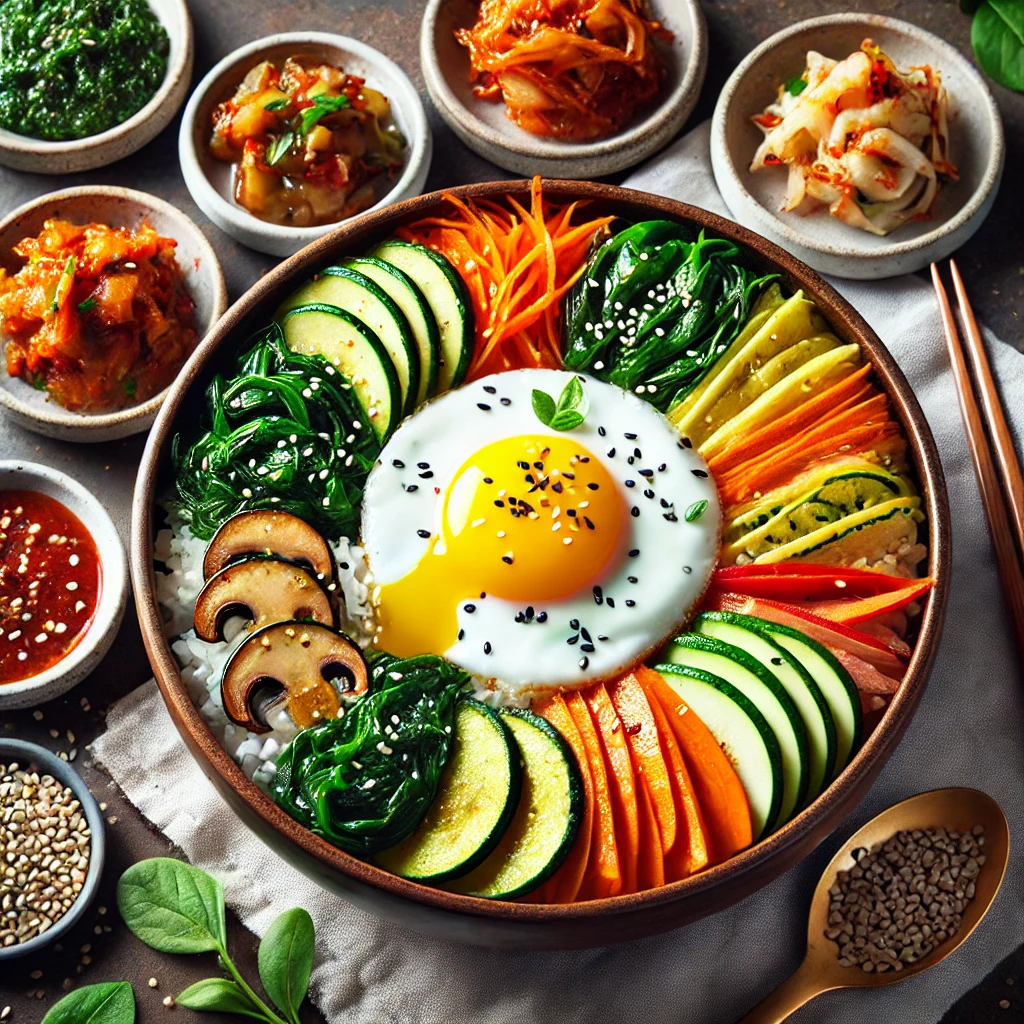
Bibimbap is one of Korea’s most loved comfort foods: a warm bowl of rice topped with seasoned vegetables, protein, a fried egg, sesame oil, and a spoonful of spicy-sweet gochujang sauce. The word comes from Korean, where bibi means “mix” and bap means “rice,” so the name literally describes the best part of the meal: mixing everything together until every bite is colorful, savory, and deeply satisfying.
Bibimbap is popular because it is flexible, balanced, and easy to customize. You can make it with bulgogi beef, chicken, tofu, mushrooms, seafood, or extra vegetables. You can keep the sauce mild or make it fiery. You can serve it in a regular bowl for a quick dinner or in a hot stone bowl for the crispy rice version known as dolsot.
What Makes This Korean Rice Bowl Special
The beauty of bibimbap is the contrast. Soft rice meets crisp-tender vegetables. Rich egg yolk blends with chili paste and sesame oil. Sweet carrots, earthy mushrooms, garlicky spinach, crunchy bean sprouts, and savory protein all come together in one bowl.
Unlike many composed dishes, bibimbap is designed to be mixed at the table. The toppings are usually arranged neatly over the rice first, giving the bowl its signature rainbow look. Then you stir everything together so the sauce, yolk, rice, vegetables, and protein become one flavorful meal.
Which Ingredient Is Commonly Placed on Top?
The ingredient most commonly placed on top of bibimbap is a fried egg, usually sunny-side up with a runny yolk. When mixed into the warm rice, the yolk creates a creamy sauce that helps bind the vegetables, gochujang, sesame oil, and rice together. A spoonful of gochujang is also commonly added on top or served on the side so each person can control the heat.
A Brief History of the Dish
The exact origin of bibimbap is debated, but it is often linked to practical Korean home cooking. Families could combine leftover rice, vegetables, and small portions of meat into one nourishing bowl. It is also associated with harvest meals, ancestral rites, and regional specialties.
One famous bibimbap version comes from Jeonju, a Korean city known for generous toppings and deeply flavored rice. Another beloved version is dolsot, served in a heated stone bowl that creates a golden, crunchy layer of rice on the bottom. Whether simple or elaborate, bibimbap reflects a core idea in Korean cooking: balance of color, texture, temperature, and flavor.
Essential Ingredients
Rice: Short-grain white rice is traditional because it is slightly sticky and holds the toppings well. Brown rice or multigrain rice also works if you prefer a heartier base.
Vegetables: Classic toppings include spinach, bean sprouts, carrots, zucchini, and shiitake mushrooms. Each vegetable is usually cooked and seasoned separately, which keeps the flavors clean and the colors bright.
Protein: Bulgogi-style beef is popular, but chicken, pork, tofu, shrimp, or mushrooms are all excellent options. For vegetarian bibimbap, tofu and shiitake mushrooms add plenty of savory depth.
Egg: A sunny-side-up egg is the classic finishing touch. The runny yolk adds richness and makes the bowl feel complete.
Gochujang: This Korean red chili paste brings heat, sweetness, saltiness, and umami. For a smoother sauce, mix gochujang with sesame oil, rice vinegar, a little sugar or honey, and water.
Sesame oil and sesame seeds: These add a nutty aroma and make the bowl taste restaurant-worthy.
Kimchi: Kimchi is often served on the side. Its tangy, fermented flavor cuts through the richness of the egg and sauce.
Easy Homemade Bibimbap Recipe
Ingredients
- 2 cups cooked short-grain rice
- 8 ounces bulgogi beef, chicken, tofu, or mushrooms
- 2 cups fresh spinach
- 1 cup bean sprouts
- 1 carrot, julienned
- 1 small zucchini, sliced into thin half-moons
- 1 cup sliced shiitake mushrooms
- 1 egg per serving
- 2 tablespoons gochujang
- 1 tablespoon sesame oil, plus more for seasoning
- 1 teaspoon rice vinegar
- 1 teaspoon honey or sugar
- 1 small garlic clove, minced
- Salt, to taste
- Toasted sesame seeds, for garnish
- Kimchi, for serving
Instructions
- Cook the rice. Prepare short-grain rice according to package directions. Keep it warm while you prepare the toppings.
- Make the sauce. In a small bowl, stir together gochujang, sesame oil, rice vinegar, honey, and a splash of water. Adjust with more water if you want a thinner sauce.
- Season the spinach. Blanch spinach for 30 seconds, rinse under cold water, squeeze out excess moisture, and season with garlic, sesame oil, and a pinch of salt.
- Season the bean sprouts. Blanch bean sprouts for 1 to 2 minutes, drain well, and season with sesame oil and salt.
- Cook the vegetables. Stir-fry carrots, zucchini, and mushrooms separately with a small amount of oil and salt. Cooking them separately improves the final flavor and presentation.
- Cook the protein. Stir-fry your beef, chicken, tofu, or mushrooms until browned and cooked through. If using tofu, press it first so it crisps better in the pan.
- Fry the egg. Cook the egg sunny-side up, leaving the yolk runny if you enjoy a creamy bowl.
- Assemble. Add warm rice to a bowl. Arrange the vegetables and protein in sections over the top. Place the fried egg in the center, add sauce, drizzle with sesame oil, and sprinkle with sesame seeds.
- Mix before eating. Stir everything together until the rice is coated and the toppings are evenly distributed.
Recipe Tips for Better Flavor
Season each topping lightly. Since the sauce is bold, every vegetable needs only a little salt, garlic, or sesame oil.
Cut vegetables evenly. Thin, uniform pieces cook quickly and make the bowl easier to mix.
Do not skip the sesame oil. It adds the nutty aroma that makes bibimbap taste complete.
Serve the sauce on the side for families. This lets everyone choose their own spice level.
Use leftover rice for dolsot-style crispiness. Day-old rice crisps beautifully in a hot pan or stone bowl.
Popular Variations
Dolsot bibimbap version: Heat a stone bowl or heavy skillet, brush it with sesame oil, add rice, then arrange the toppings over it. Let the rice sizzle until the bottom becomes crisp before mixing.
Vegetarian version: Replace meat with tofu, tempeh, extra mushrooms, or edamame. Use plenty of gochujang sauce and sesame oil for depth.
Seafood version: Top the rice with shrimp, squid, or cooked salmon. Keep the vegetables light and add a touch more vinegar to the sauce for brightness.
Spicy version: Add extra gochujang, sliced fresh chilies, or a spoonful of kimchi juice.
Meal prep version: Prepare the vegetables, protein, and sauce in advance, then store them separately. Reheat the rice and protein before assembling.
Nutrition Benefits
Bibimbap can be a balanced meal in one bowl. Rice provides energy, vegetables add fiber and micronutrients, protein makes it filling, and sesame oil contributes satisfying fat. Gochujang is made with fermented ingredients, which adds bold flavor and complexity, though it can be salty, so adjust the amount to fit your needs.
For a lighter bowl, use more vegetables and less rice. For a higher-protein bowl, add extra beef, tofu, chicken, or egg. For a whole-grain option, use brown rice or mixed grains.
What to Serve With It
Serve the bowl with kimchi, cucumber salad, miso soup, or Korean-style seaweed soup. For a larger meal, add mandu dumplings, grilled vegetables, or a simple lettuce salad with sesame dressing.
Storage and Reheating
Store rice, vegetables, protein, and sauce in separate airtight containers when possible. The toppings will keep well for up to 3 days in the refrigerator. Reheat the rice and protein until warm, then add vegetables, egg, and sauce just before serving. For the freshest texture, fry the egg right before eating.
Frequently Asked Questions
What does bibimbap mean?
It means mixed rice. The name describes the way the rice, vegetables, sauce, egg, and protein are stirred together before eating.
Is it always spicy?
No. The heat comes mostly from gochujang, so you can use less sauce or serve it on the side.
Can I make it without meat?
Yes. Tofu, mushrooms, edamame, or extra vegetables make a satisfying meatless bowl.
Is corn commonly placed on top?
Corn is not one of the most traditional toppings. Common toppings include a fried egg, spinach, bean sprouts, carrots, zucchini, mushrooms, and gochujang.
Can I use brown rice?
Yes. White short-grain rice is classic, but brown rice and multigrain rice work well.
Final Thoughts
Bibimbap is colorful, comforting, and endlessly adaptable. It gives you the pleasure of a restaurant-style Korean meal while using simple ingredients you can prepare at home. Start with warm rice, add a few seasoned vegetables, choose your protein, finish with a fried egg and gochujang sauce, then mix everything together for a bowl that is bold, nourishing, and full of texture.